Most coop problems that show up later, from pecking and dirty eggs to damp bedding, start with too little space. The numbers below are the minimums most university extension guides and experienced keepers work from. Treat them as a floor, not a target.
The four numbers to plan around
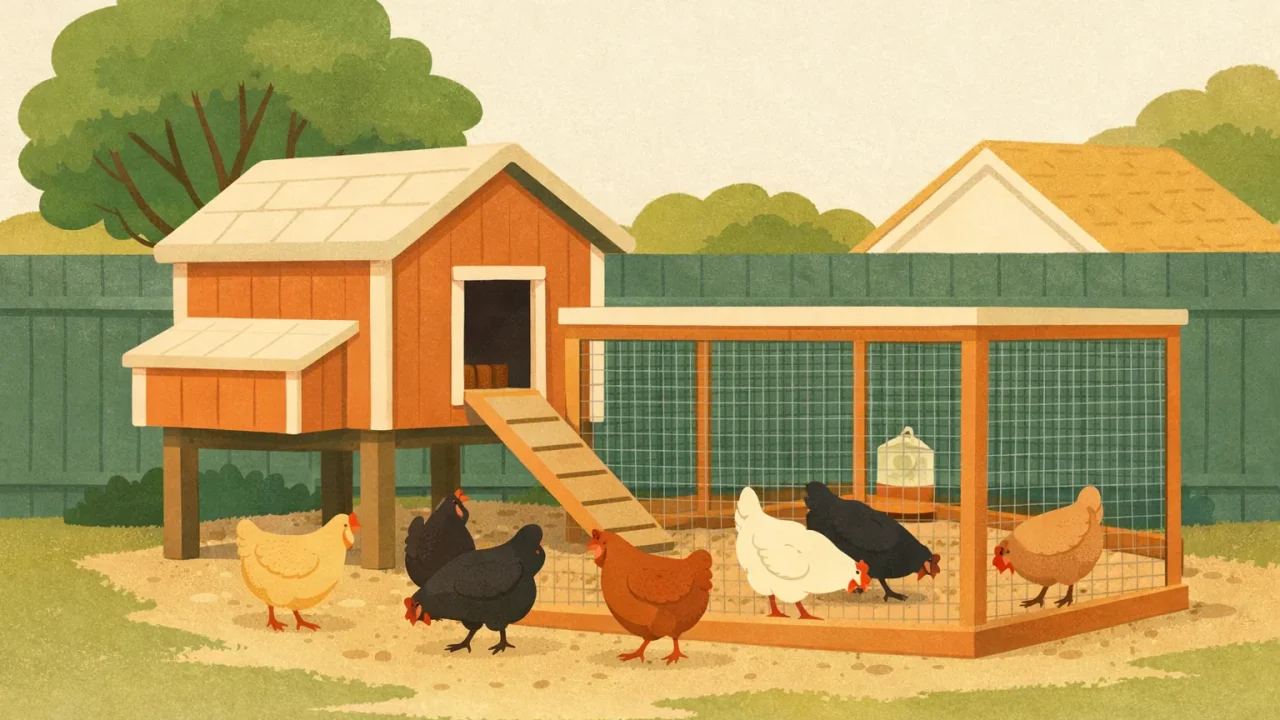
- Coop floor: about 4 square feet per standard-size hen when the flock also has a run, and closer to 10 if they are shut in all day. Bantams need roughly half.
- Run: about 10 square feet per hen. More is better; bare, muddy runs are a sign of crowding.
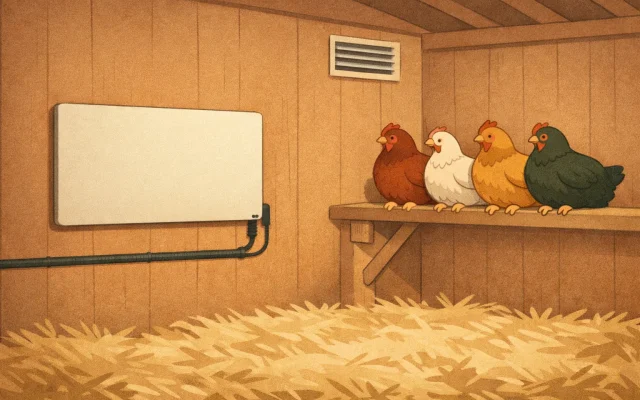
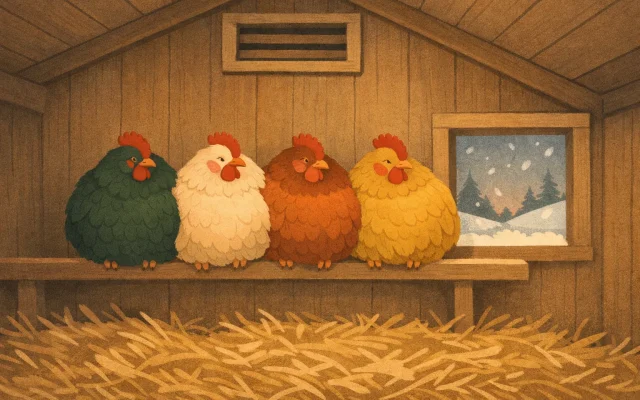
- Roost: 8 to 12 inches of perch per bird. Large breeds need the upper end.
- Nest boxes: one for every four or five hens. They will share, and usually all want the same one.
Coop and run size by flock
| Hens | Coop floor (min.) | Example footprint | Run (min.) | Roost length | Nest boxes |
|---|---|---|---|---|---|
| 4 | 16 sq ft | 4 × 4 ft | 40 sq ft | 3–4 ft | 1 |
| 6 | 24 sq ft | 4 × 6 ft | 60 sq ft | 4–6 ft | 2 |
| 10 | 40 sq ft | 5 × 8 ft | 100 sq ft | 7–10 ft | 2–3 |
| 20 | 80 sq ft | 8 × 10 ft | 200 sq ft | 14–20 ft | 4–5 |
Why “fits 6 chickens” on the box is often wrong
Many kit coops quote capacity using far less space per bird than the figures above. Before you trust a capacity claim, find the interior floor dimensions in the listing and divide the square footage by four. A coop sold for six hens with a 3 × 4 foot floor has 12 square feet, which is comfortable for three.
Plan for the flock you will have
Flocks grow. If you think you want four hens, building or buying for six costs little more now and saves replacing the coop in two years. Check your local rules on flock size first, since they set the real ceiling.
Do not forget height and airflow
Floor space is only part of it. Roosts should sit higher than the nest boxes so hens sleep on the roosts, and the coop needs vents high on the walls, above roost level, so moist air leaves without a draft blowing across sleeping birds. Ventilation matters as much in winter as in summer. The winter coop checklist explains how to get it right.