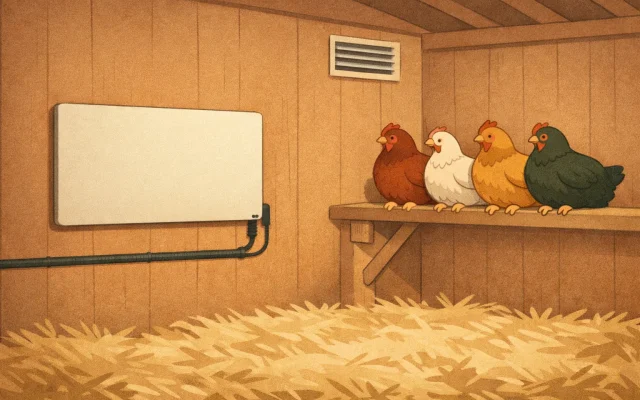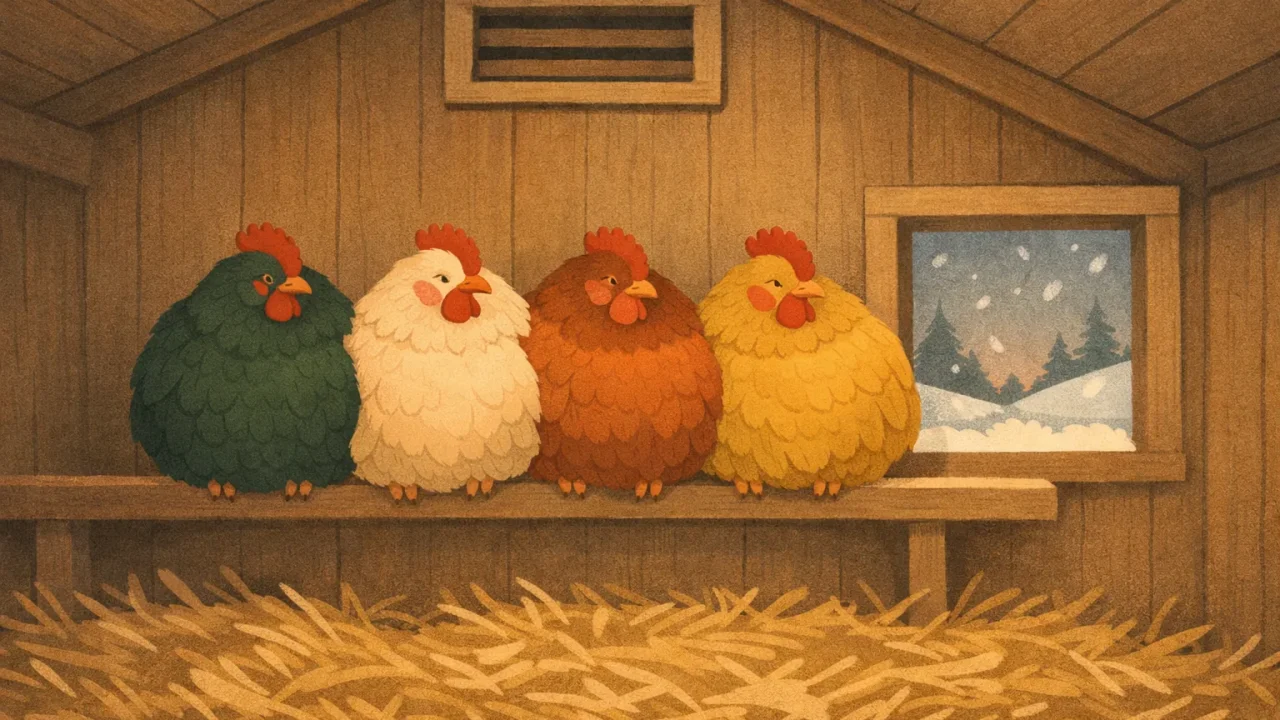
Healthy adult chickens keep themselves warm. Their feathers trap a layer of warm air, and at night they fluff up and huddle on the roost. What harms them in winter is damp air, drafts across the roost, frozen water and too little food. Fix those four things and most backyard flocks need no added heat at all; university extension services generally advise against heating coops because of the fire risk.
1. Block drafts at roost height, keep ventilation up high
Seal gaps at and below roost level, but leave vents open high on the walls or under the eaves, ideally on the side away from the prevailing wind. University of Illinois Extension puts the test simply: you should never see air moving the chickens’ feathers inside the coop in winter. A coop that is sealed tight traps the moisture the birds breathe out, and damp air is what turns cold weather into frostbite.
2. Keep the coop dry
Moisture comes from breath, droppings and spilled water. Use a deep layer of dry bedding: Illinois Extension suggests 6 to 12 inches, and UNH Extension recommends 4 to 6 inches of straw or pine shavings where the floor is open to the ground. Bedding that is wet, packed down or smells of ammonia is a sign of a moisture or ventilation problem, not a reason to close the vents.
3. Give them wide wooden roosts
UNH Extension recommends 9 to 12 inches of roost per bird, using wooden roosts rather than metal, which holds the cold and can contribute to frostbitten feet. A wide, flat roost lets hens cover their toes with their bodies while they sleep.
4. Keep water liquid
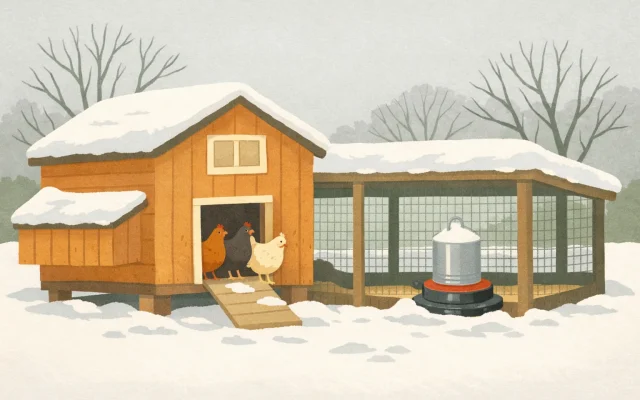
Chickens stop eating when they cannot drink. Illinois Extension advises giving access to water at least every 10 hours, day and night, and checking for leaks and spills that add moisture to the coop. A heated waterer or heated base is the usual answer. Keep cords off the floor and out of reach, and check the water at least twice a day in a hard freeze. Without power, swap two waterers morning and evening, or use a rubber bucket that you can knock the ice out of.
5. Feed a little more, and give a late snack
Birds burn more energy to stay warm. UNH Extension notes they may eat up to 25 percent more in cold weather, and both extension services suggest scattering scratch grains in the late afternoon so the birds go to roost with a full crop. Keep the complete feed available all day, and offer grit if they are eating grains.
6. Protect combs and wattles
Breeds with large single combs and big wattles are the most likely to get frostbite. Both Illinois and UNH Extension suggest a thin coat of petroleum jelly on combs and wattles on the coldest days. Frostbitten tissue turns pale or grey and later dark; if you suspect frostbite, ask a vet who treats poultry before trying to treat it at home.
7. Make the run usable
Many hens will not walk on snow. Clearing a patch of the run or scattering straw over it, as Illinois Extension suggests, gets them out of the coop during the day, which keeps the coop drier. A windbreak on the exposed side of the run, such as a tarp or plywood panel, makes a big difference on bright, windy days.
8. Plan for hardier birds next time
If you live where winters are long and hard, flock choice matters. UNH Extension notes that larger breeds handle cold best and birds with small combs are at less risk of frostbite, while bantams may need extra insulation. See the breed guides before you order next spring’s chicks.
Signs your hens are too cold
Huddling all day, standing on one foot and then the other, and staying constantly fluffed up can mean birds are struggling. UNH Extension’s advice is to look for drafts and add bedding first. Shivering, lethargy or a bird that will not eat needs a closer look and possibly a vet.
What about heat and light?
Most flocks do not need a heater, and heat lamps are a well-known cause of coop fires. Read do chickens need a coop heater? before you buy one. Supplemental light is optional: it keeps hens laying through short days (extension guidance is 14 to 16 hours of light in total), but it is not needed for warmth. For the full list of jobs to finish before the first freeze, see the winter coop checklist.