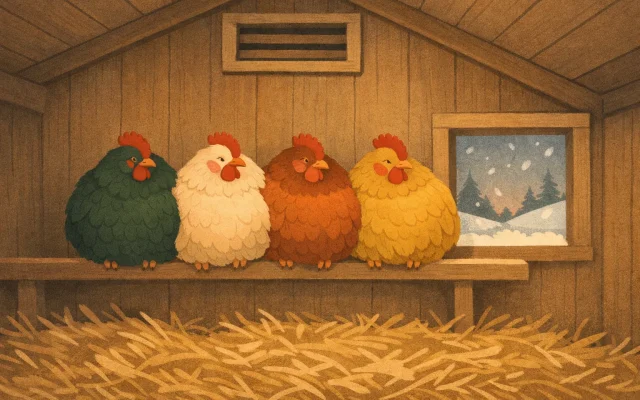
Usually not. Healthy adult chickens of standard size cope with cold well when their coop is dry, draft-free and ventilated, and they have liquid water and enough feed. Extension services generally advise against heating the coop because heat sources are a common cause of coop fires. There are a few exceptions, covered below, and if you do add heat it should be a purpose-built, safety-rated device rather than a heat lamp.
Why most flocks do not need heat
A chicken’s feathers trap a layer of warm air against its body, and roosting birds fluff up and sit close together overnight. The real winter risks are moisture, drafts and frozen water, which is why University of Illinois Extension and UNH Extension both focus their winter advice on ventilation, dry bedding and water rather than on heating. If your coop is damp or drafty, heat treats the symptom and adds a fire risk; fixing the coop solves the problem. See how to keep chickens warm in winter for the steps.
The fire risk is real
Coops are full of dry bedding, dust and feathers. A Maine fire marshal official interviewed by the Bangor Daily News named heat lamps, extension cords, bedding and water heaters as leading causes of coop fires, and North Dakota State University Extension warns that heat lamps add fire risk to farm buildings, especially over deep bedding. Common causes include:
- A heat lamp knocked or falling into bedding.
- Extension cords that are undersized, damaged or exposed to weather.
- Rodents chewing through cords.
- Dust and feathers building up on a hot surface.
When heat can make sense
- Chicks need supplemental heat until they are feathered, usually about six weeks. That is brooder heat, not coop heat: see the brooder temperature chart.
- Bantams and other small birds in severe cold. UNH Extension notes that bantams may need insulation or a specially designed, safety-rated heater.
- A sick or recovering bird kept apart from the flock, on a vet’s advice.
If you add heat, do it safely
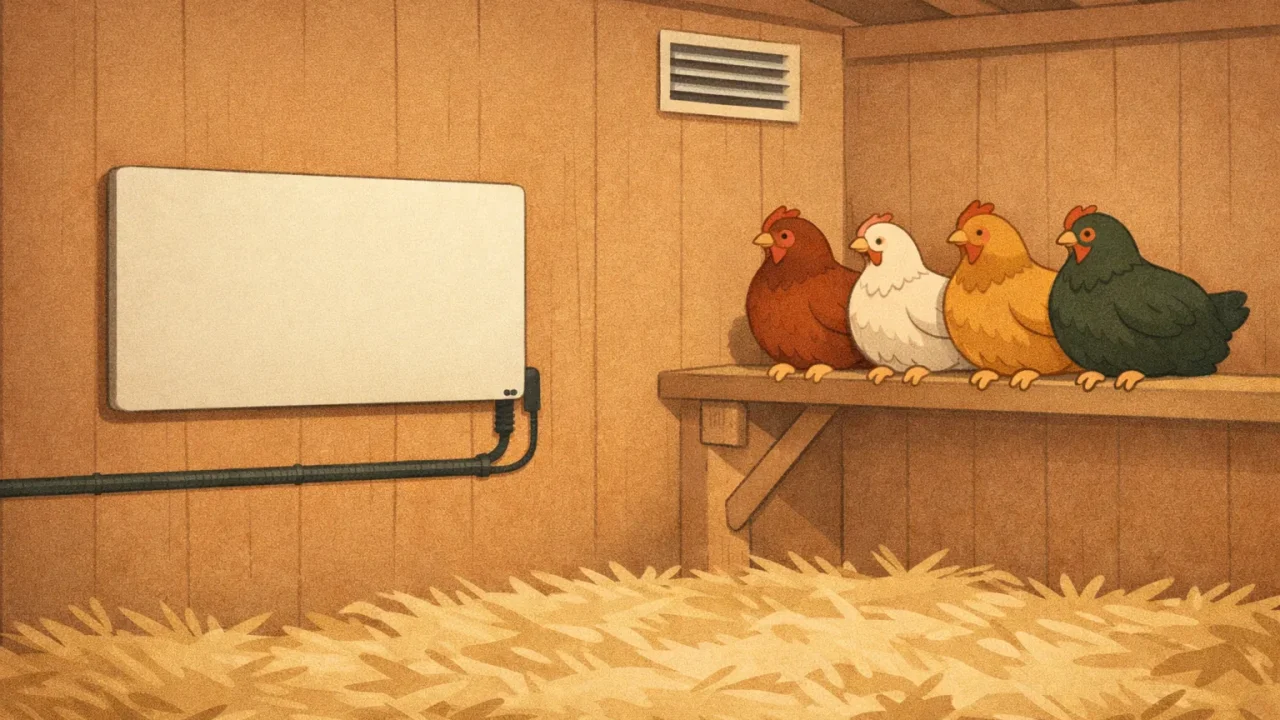
- Use a heater made for coops, such as a flat radiant panel, not a heat lamp. Look for a recognised safety certification and follow the maker’s clearances exactly.
- Mount it securely where birds cannot perch on it or knock it, and keep it clear of bedding and nesting material.
- Plug it directly into an outlet suitable for outdoor or barn use. NDSU Extension advises against running heat sources through extension cords.
- Protect cords from rodents and pecking, and keep connections off the floor and out of the weather.
- Aim to take the edge off the cold, not to make the coop warm. A thermostat helps.
- Check it every day and clean off dust and feathers.
If you only use a heat lamp because nothing else is to hand, Cornell’s Small Farms Program and NDSU Extension both stress securing it as if it were a permanent fixture and checking it daily. A purpose-built heater is the better choice.
The one electrical item most flocks do need
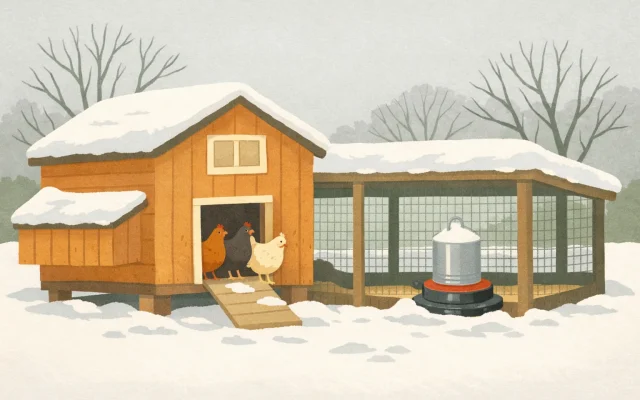
In freezing climates, the most useful thing to power is the water, not the air. A heated waterer or heated base keeps water liquid, which chickens need at least every 10 hours according to Illinois Extension. The same safety rules apply to its cord. The winter coop checklist covers water and ventilation together.
Sources
- University of Illinois Extension: Winter Care for Backyard Chickens
- University of New Hampshire Extension: How Should I Take Care of Backyard Chickens in the Winter?
- North Dakota State University Extension: Take Precautions When Using Heat Lamps
- Cornell Small Farms Program: Managing Risk, Using Heat Lamps on the Farm
- Bangor Daily News: Heat lamps and chicken coop fire risk (interview with a Maine fire marshal official)