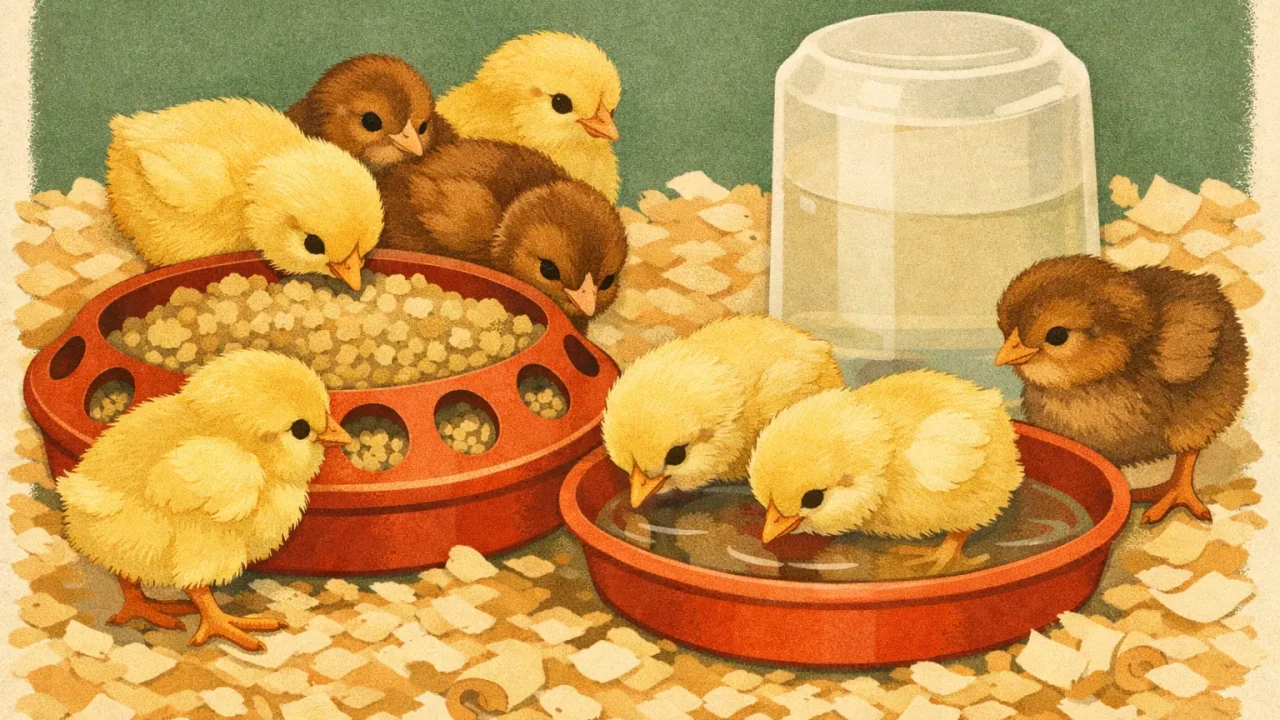
Baby chicks eat chick starter: a crumbled feed with 18 to 20 percent protein, made to be their whole diet. With starter and clean water always available, a chick needs nothing else.
Chick starter
- Protein: 18 to 20 percent for chicks that will be laying hens. Meat breeds are fed a higher-protein starter.
- Form: crumbles, which are small enough for a day-old chick.
- How much: keep the feeder filled and let them eat freely. Chicks do not overeat starter.
- How long: follow the age range on the bag. Many flocks move to a grower feed after the first several weeks, and to layer feed only when hens are close to laying.
Do not feed layer feed to chicks or young pullets. It is made for laying hens and carries several times the calcium a growing bird needs, which can damage young kidneys. Most keepers switch to layer feed at around 18 weeks or when the first egg appears.
Medicated or unmedicated?
Medicated starter usually contains amprolium, which helps prevent coccidiosis, a common gut disease in young birds. Which one to feed depends on whether your chicks were vaccinated against coccidiosis at the hatchery. Vaccinated chicks should get unmedicated starter, because amprolium can stop the vaccine from working. Unvaccinated chicks are commonly started on medicated feed. Ask the hatchery when you order, and read the bag: Penn State Extension notes that some feeds labelled “medicated” contain something other than amprolium.
Water
Chicks drink a lot for their size and go downhill fast without water. Use a chick waterer with a narrow trough, dip each chick’s beak when they arrive so they find it, and change the water at least daily. Raise the waterer on a block once they start kicking bedding into it.
Treats and grit
Treats are optional and best kept small. Scratch grains and kitchen scraps are low in protein, and every beakful replaces starter the chick needs for growth. If you do offer anything other than starter, also offer chick-size grit, which birds need to grind up whole foods.
What not to feed chicks
- Layer feed or oyster shell (too much calcium).
- Scratch grains as a main feed (too little protein).
- Anything mouldy or spoiled.
- Salty, sugary or processed human food.
Feeder space
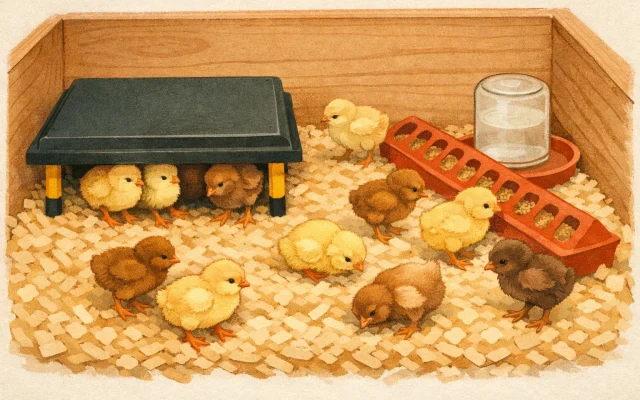
Allow about an inch of feeder edge per chick in the first weeks and more as they grow, so the smallest chicks are not pushed away. Full brooder setup is in how to raise baby chicks.
Sources
- Penn State Extension: Brooding of Domestic Fowl
- Oregon State University Extension: Raising Baby Chicks
- University of Maine Cooperative Extension: Giving Chicks a Good Start (Bulletin 2219)
- North Dakota State University Extension: Beginner’s Guide to Raising Chickens
- Penn State Extension: Managing Chicken Coccidiosis in Small Flocks