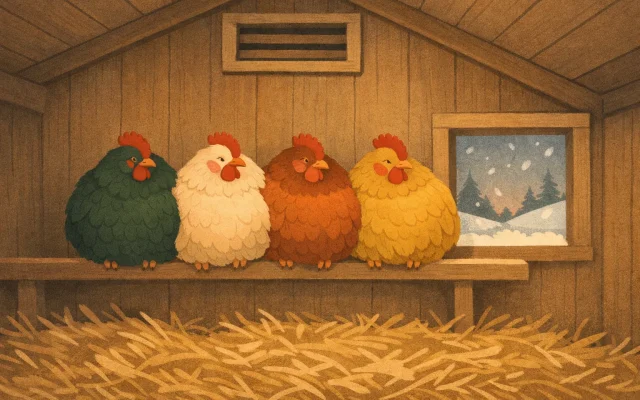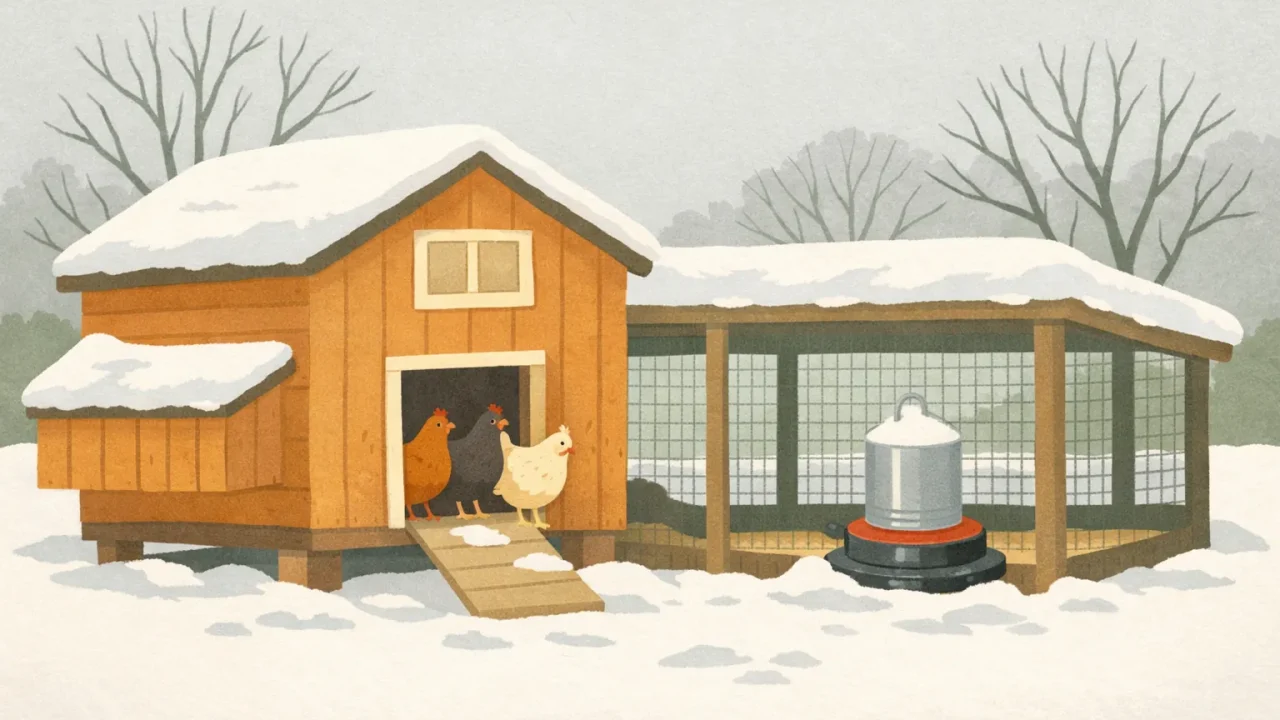
Healthy, fully feathered chickens handle cold well. What harms them in winter is damp air, drafts across the roost and frozen water. Do these jobs while the weather is still mild enough to work outside. The steps below, and how to keep chickens warm in winter, cover all three.
1. Fix drafts, keep ventilation
Seal gaps at roost height and below, but leave vents open high on the walls. Birds breathe out a lot of moisture overnight; if it cannot escape it condenses, and damp cold is what leads to frostbitten combs. If you see frost or condensation inside the coop in the morning, it needs more ventilation, not less.
2. Sort out water before it freezes
Chickens stop eating when they cannot drink. Decide now how you will keep water liquid: a heated waterer or heated base if you have safe outdoor power, or two waterers that you swap morning and evening if you do not. Check any electrical cord for damage and keep connections off the ground and out of bedding.
3. Check the roosts
Wide, flat roosts let birds cover their feet with their bodies while they sleep. A 2 × 4 laid with the wide side up is a common choice. Make sure there is 8 to 12 inches of roost per bird so nobody is pushed onto the floor.
4. Refresh the bedding
Start winter with deep, dry bedding. Wet bedding adds moisture to the air and ammonia at bird level. Fix any roof leak now, and move waterers outside the coop or onto a platform if they spill.
5. Think hard before adding heat
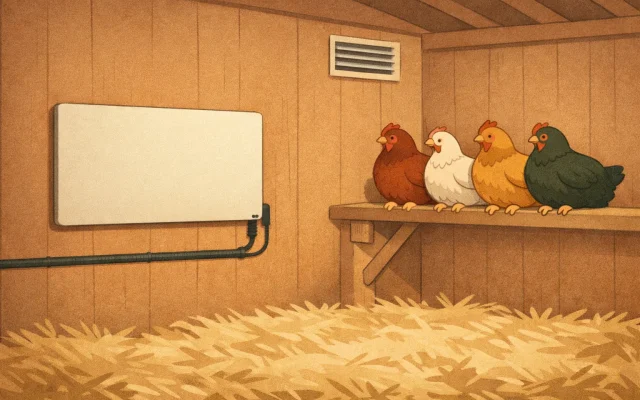
Most backyard flocks in most climates do not need a heated coop, and heat lamps are a well-known cause of coop fires. If you live where temperatures stay far below zero and decide to add heat, use a device designed for coops, mount it securely away from bedding and follow the maker’s clearances. For the details, read do chickens need a coop heater?
6. Walk the run for predators
Food gets scarce in winter and predators get bolder. Check every latch, look for digging along the fence line and replace any chicken wire on openings with half-inch hardware cloth.
7. Plan for short days
Egg laying drops as daylight shortens. That is normal. Whether to add supplemental light is a choice; if you do, add it in the early morning on a timer so birds are never plunged into darkness away from the roost.