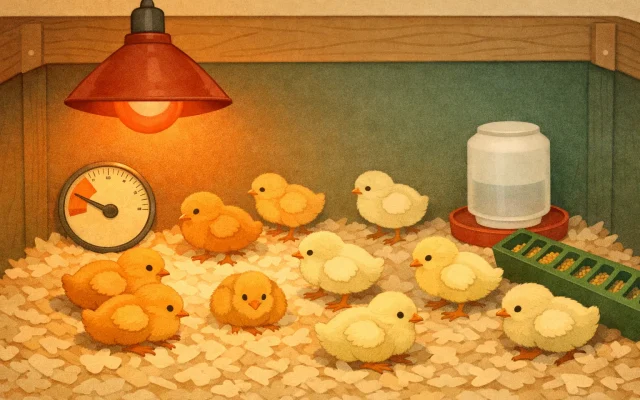
Chicks & Brooding
Brooder Temperature Chart: How Long Do Chicks Need a Heat Lamp?
Chicks need supplemental heat for about six weeks. The week-by-week temperatures, how to measure them, and how to tell when chicks are too hot or too cold.

Brooders, heat, feed and moving chicks outside.
4 guides
Chicks need supplemental heat for about six weeks. The week-by-week temperatures, how to measure them, and how to tell when chicks are too hot or too cold.

Most chicks can move to the coop at about six weeks, once they are fully feathered and nights are no colder than the brooder they are used to.
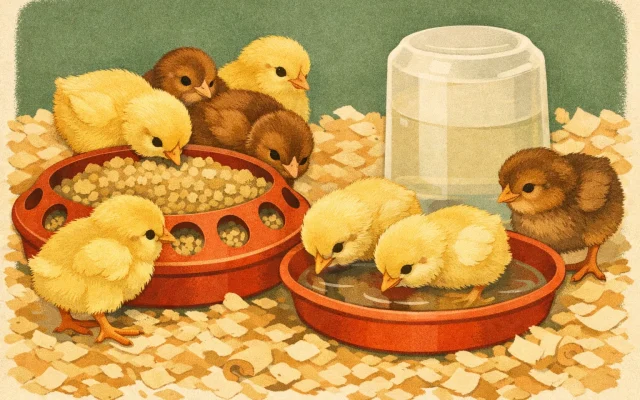
Chicks need a starter feed with 18 to 20 percent protein and clean water. What to feed, how much, when to add treats and grit, and what to avoid.
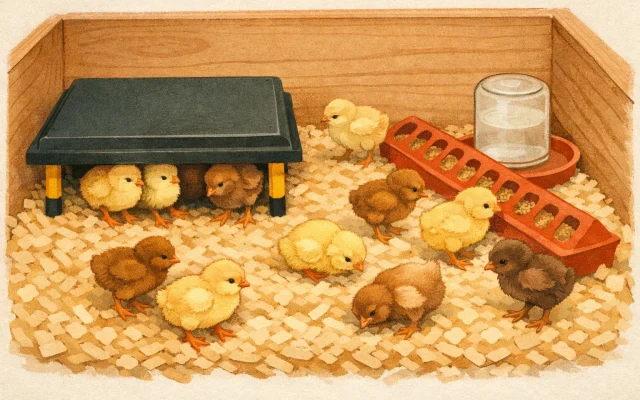
What chicks need from the day they arrive until they are feathered: heat, space, feed, water and the warning signs to watch for.
The first six weeks shape how chicks grow, and almost everything in that period depends on four things: warmth, space, food and water.
The guides in this section walk through setting up a brooder before the chicks arrive, the week-by-week heat schedule that university extension services recommend, what to feed and how to keep water clean, and the signs that chicks are too cold, too hot or unwell.
Later guides cover moving young birds outdoors once they are feathered and the weather allows, and introducing them to an existing flock without injuries. The goal is a calm, predictable brooder: chicks spread out, eating, drinking and sleeping, rather than piled under the heat or pressed against the walls.