Chicks need four things for their first six weeks: steady warmth, enough room, the right feed and clean water. Get those right and most chicks raise themselves. Set the brooder up and run the heat for a day before the chicks arrive, so you are adjusting an empty box rather than a box of cold chicks.
What to have ready before they arrive
- A brooder: a draft-free container with solid sides. Plan about half a square foot of floor per chick for the first four to six weeks; they outgrow anything smaller quickly.
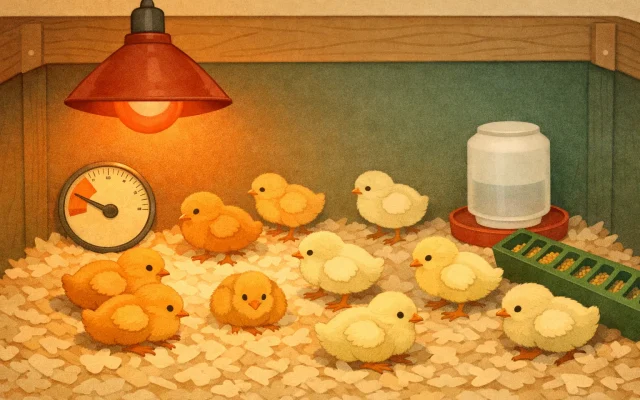
- A heat source and a thermometer you can place at chick height.
- Bedding: a few inches of absorbent material such as pine shavings. Avoid slick surfaces like bare newspaper, which give young legs no grip.
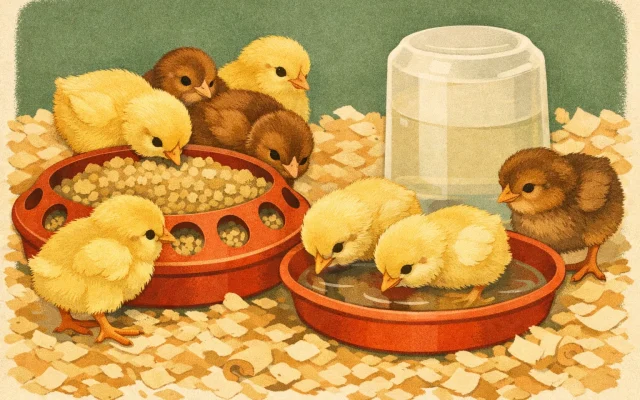
- Chick starter feed and a chick-size feeder, with about an inch of feeder space per chick.
- A chick waterer shallow enough that a chick cannot fall in and drown.
Heat: start at 95°F and step down
University extension guides agree on the schedule: 95°F at chick level for the first week, then 5 degrees cooler each week until the brooder matches the room.
| Age | Temperature at chick level |
|---|---|
| Week 1 | 95°F |
| Week 2 | 90°F |
| Week 3 | 85°F |
| Week 4 | 80°F |
| Week 5 | 75°F |
| Week 6 | 70°F, or room temperature |
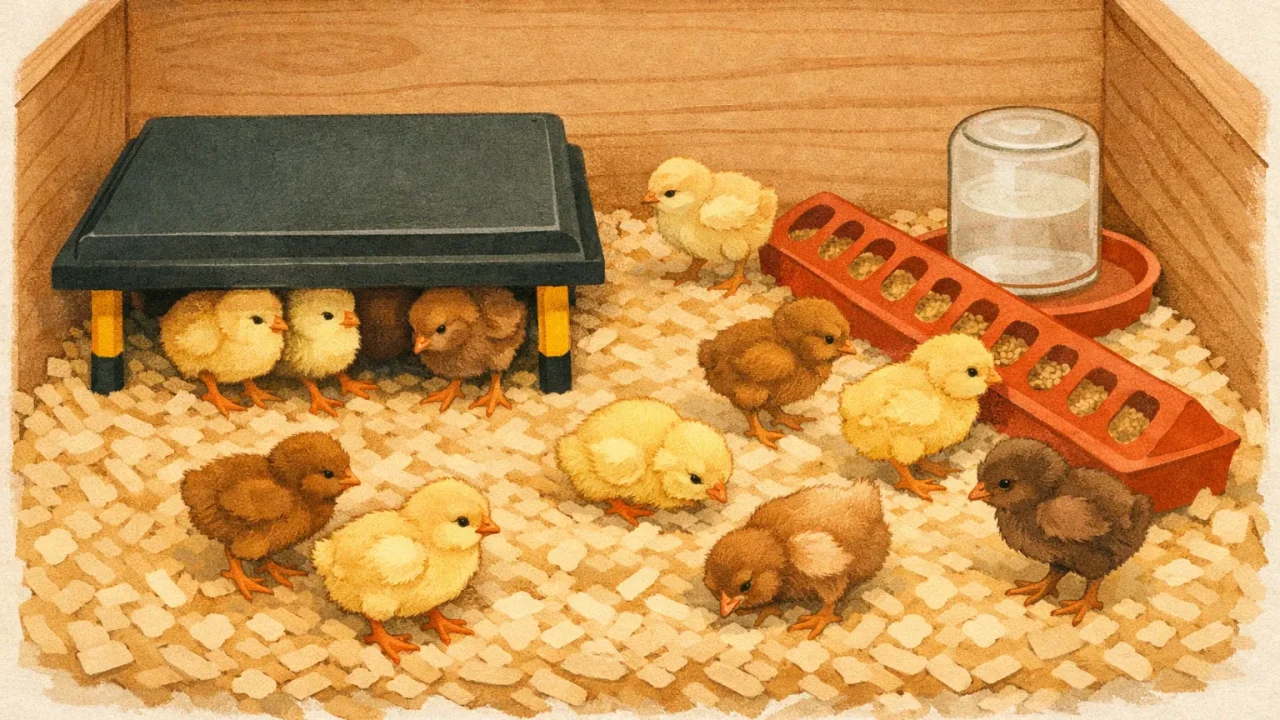
The chicks will tell you more than the thermometer. Huddled under the heat and cheeping loudly means they are cold. Pressed against the walls, away from the heat, means they are too hot. Spread evenly and quietly busy means it is right. For the detail, see our brooder temperature guide.
Feed and water
Feed a chick starter with 18 to 20 percent protein and nothing else needs to be on the menu; starter is a complete diet. When chicks arrive, dip each beak in the water so they know where it is, and keep water clean and at room temperature. More in what baby chicks eat.
Week by week
- Week 1: 95°F. Check several times a day. Look at each chick’s vent; dried droppings stuck there need gently cleaning off with warm water.
- Weeks 2–3: Wing and tail feathers come in and chicks start to jump. Add a cover to the brooder and raise the feeder and waterer to keep bedding out.
- Weeks 4–5: They look scruffy as down gives way to feathers, and they need more room. Add a low perch.
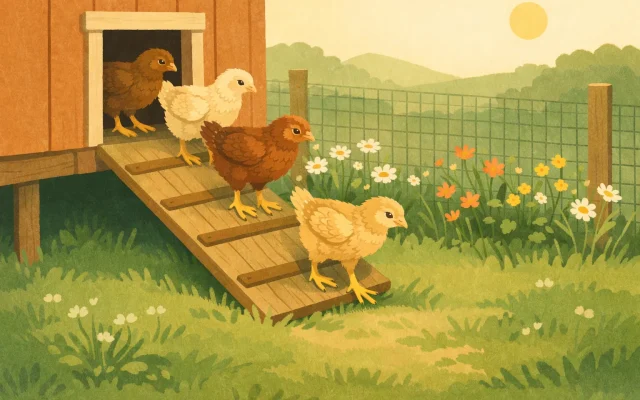
- Week 6: Most standard breeds are feathered and at room temperature. If the weather allows, start the move outdoors: see when chicks can go outside.
Warning signs
- A chick standing hunched with eyes closed, apart from the group.
- Droppings stuck over the vent.
- Loud, constant cheeping from the whole group, which usually means cold, hunger or thirst.
- Wet bedding, which chills chicks and breeds disease. Replace it straight away.
If a chick is clearly ill, contact a vet who treats poultry.
A note on heat lamps
Heat lamps are a known cause of barn and coop fires. If you use one, extension safety guidance is to secure it as if it were a permanent fixture rather than relying on its clamp, keep it well clear of bedding, plug it directly into a suitable outlet instead of an extension cord, and check it every day. Many keepers choose a heat plate instead; see heat lamp or heat plate.
Sources
- Penn State Extension: Brooding of Domestic Fowl
- Oregon State University Extension: Raising Baby Chicks
- University of Maine Cooperative Extension: Giving Chicks a Good Start (Bulletin 2219)
- North Dakota State University Extension: Beginner’s Guide to Raising Chickens
- North Dakota State University Extension: Take Precautions When Using Heat Lamps
- Cornell Small Farms Program: Managing Risk, Using Heat Lamps on the Farm
- Penn State Extension: Managing Chicken Coccidiosis in Small Flocks